
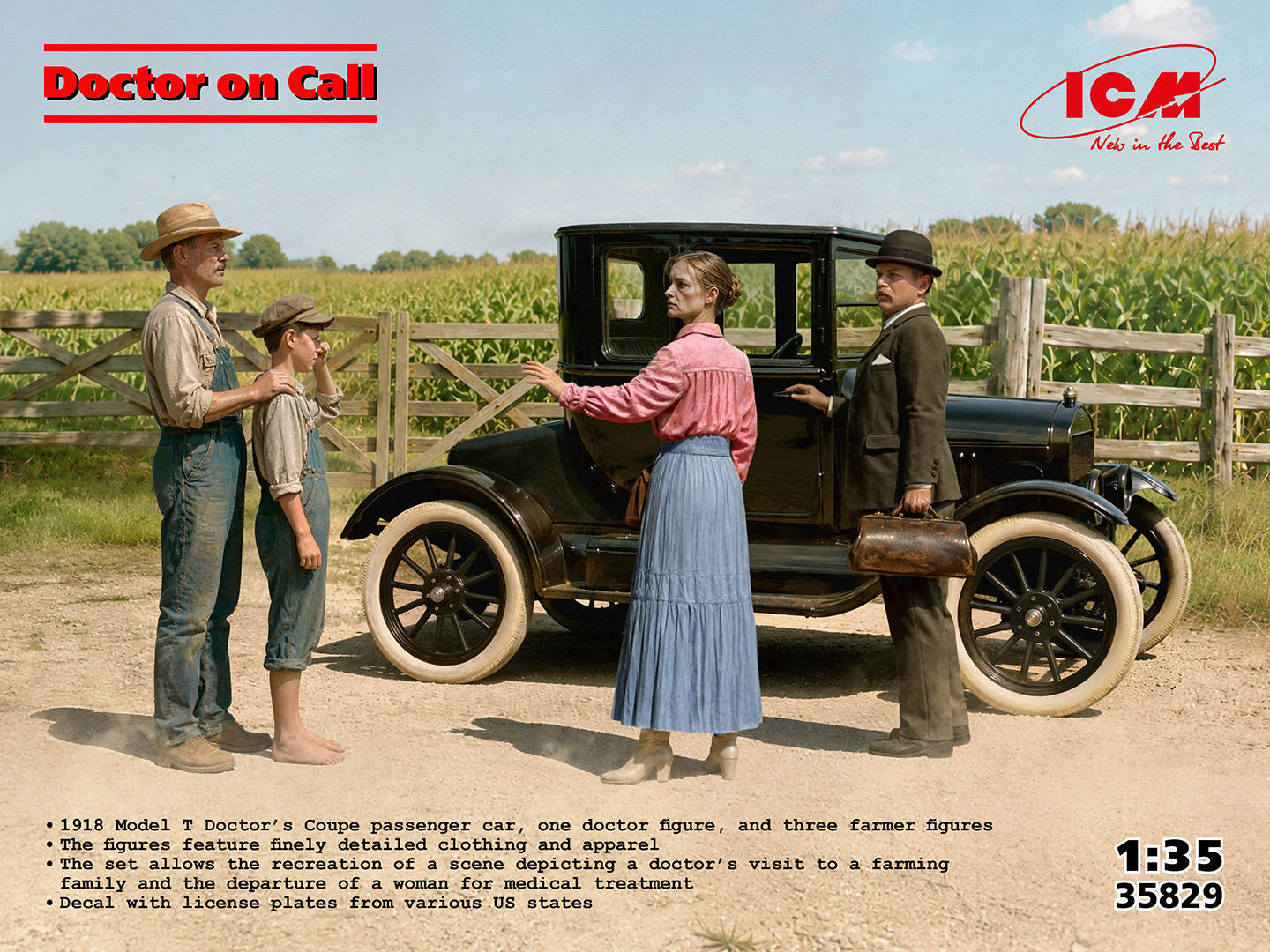




The legendary Ford Model T is rightly regarded as a true symbol of early 20th-century automotive evolution. As the world’s first mass-produced automobile, the Model T already accounted for 56% of all cars produced in the United States by 1914.
In addition to its high production numbers, the widespread adoption of the Model T was also driven by its overall reliability and build quality. Among the many variants produced by Henry Ford’s company, the Model T Coupe—later informally known as the “Doctor’s Coupe” due to its popularity among physicians—stands out.
The main advantage of this version was its fully enclosed, high-roof body. Unlike open roadsters, the closed cabin provided comfort and protection from the elements, including rain, snow, and strong winds. The vehicle enabled doctors to respond quickly to calls in remote rural areas and farms.
At the time, travel outside cities was challenging due to poor road conditions. Cars often fell into deep ruts or even overturned in ditches caused by washed-out roads. However, thanks to its simple construction and relatively high ground clearance, the Doctor’s Coupe allowed physicians to reach even the most remote locations and farms.
Where once it took hours to travel by horse-drawn carriage, the automobile significantly reduced travel time—often making a critical difference in saving lives. The car became more than just a means of transport; it was a true symbol of hope for rural communities in need of medical care.