
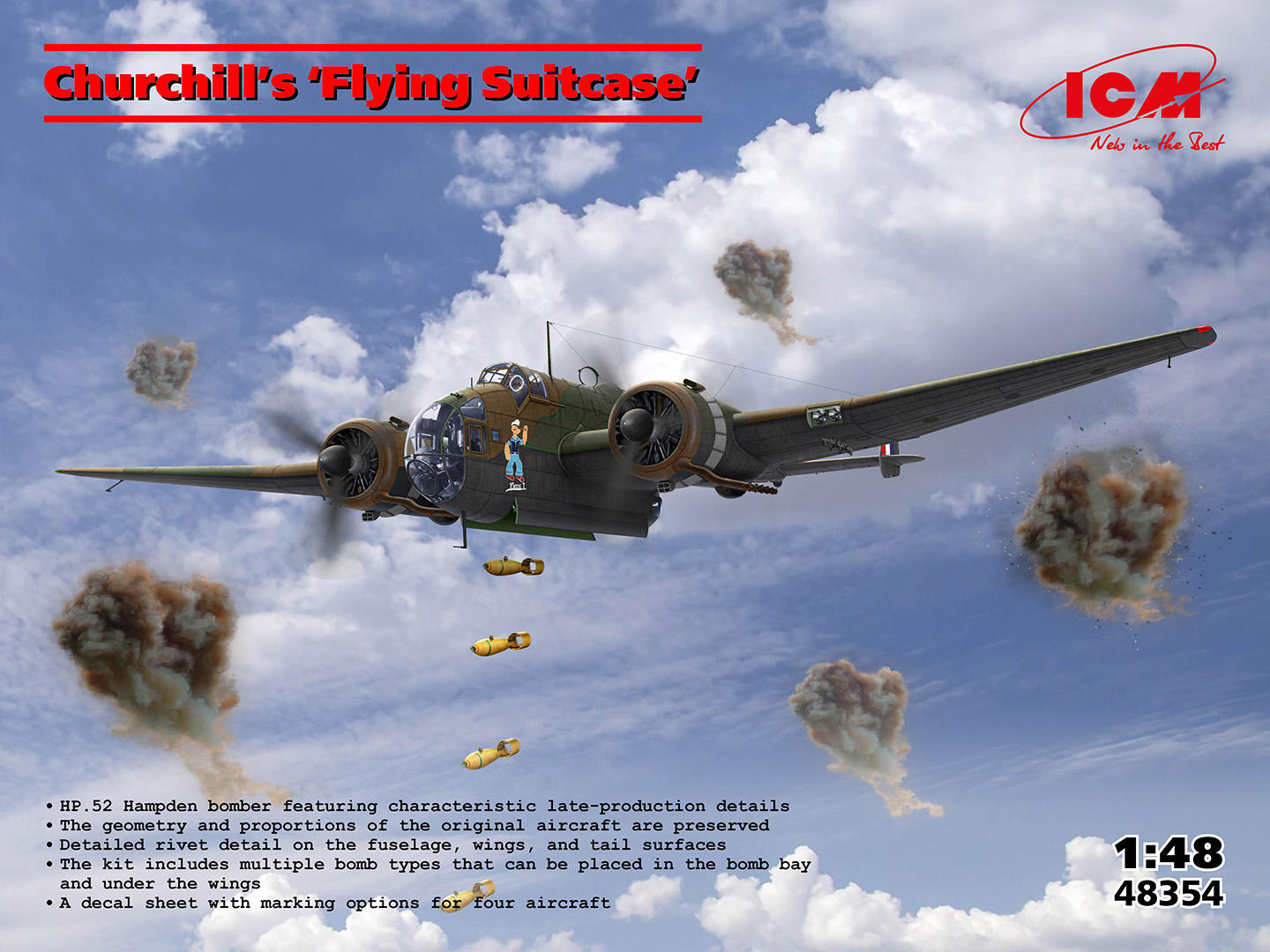
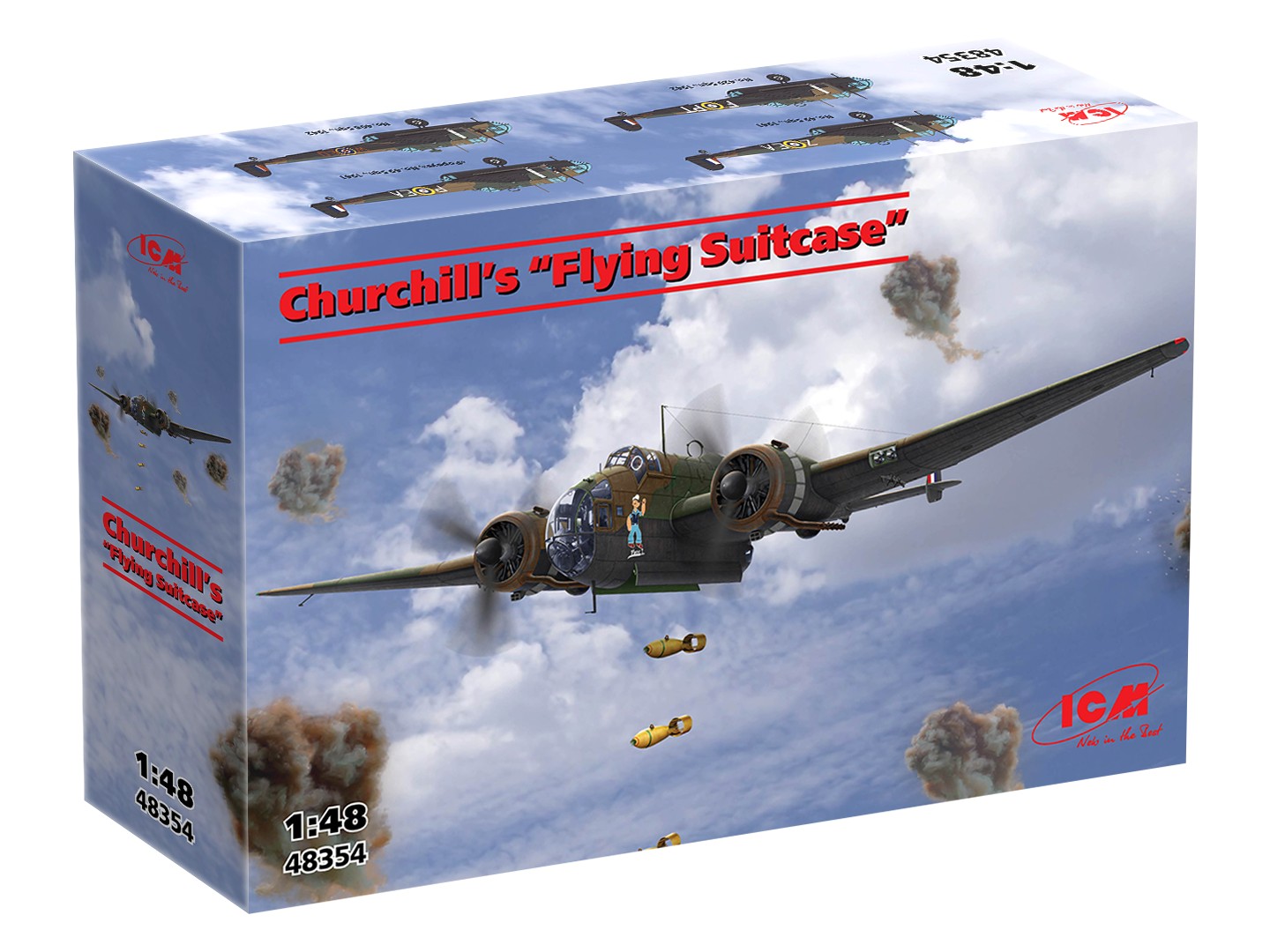
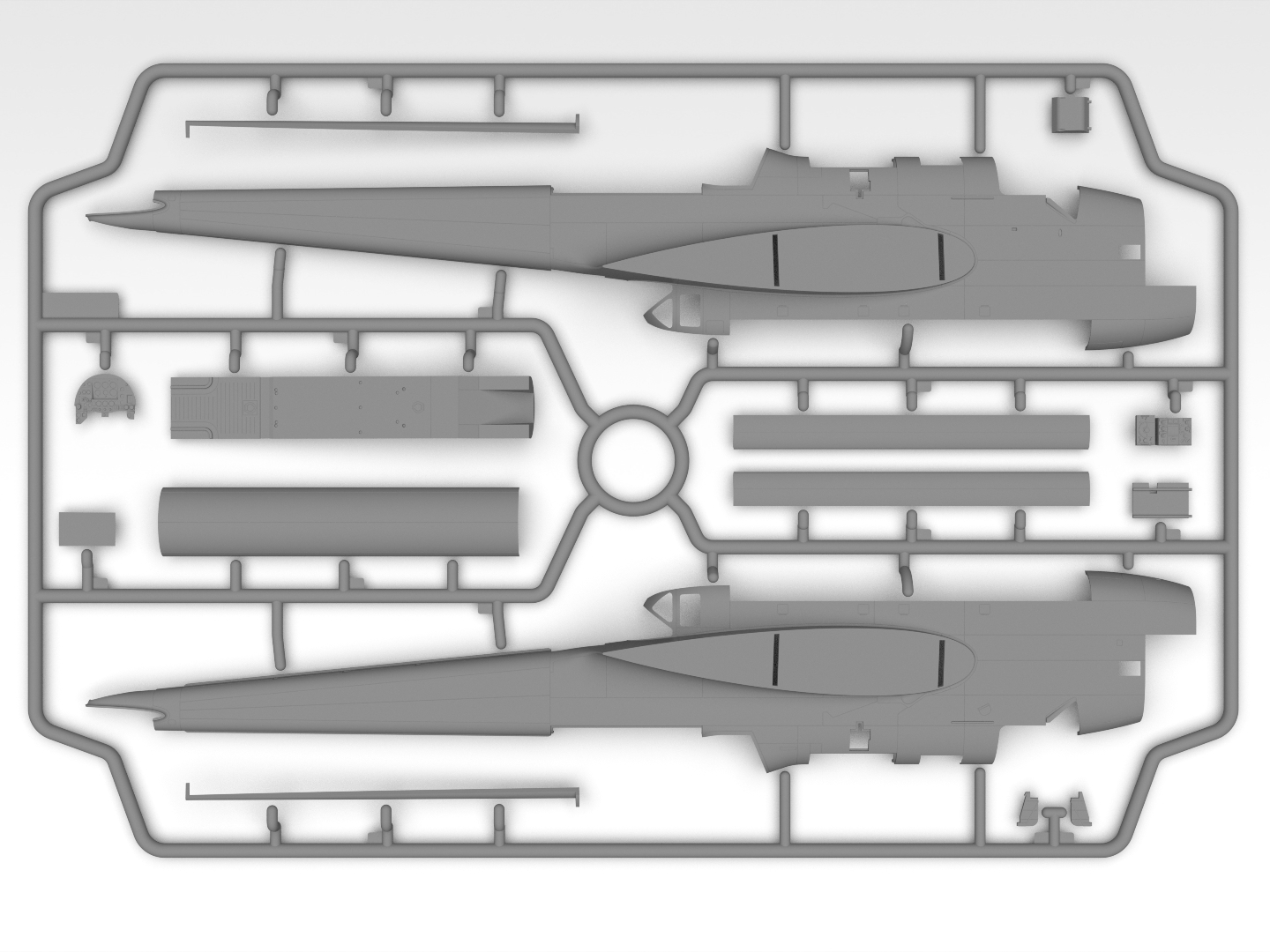
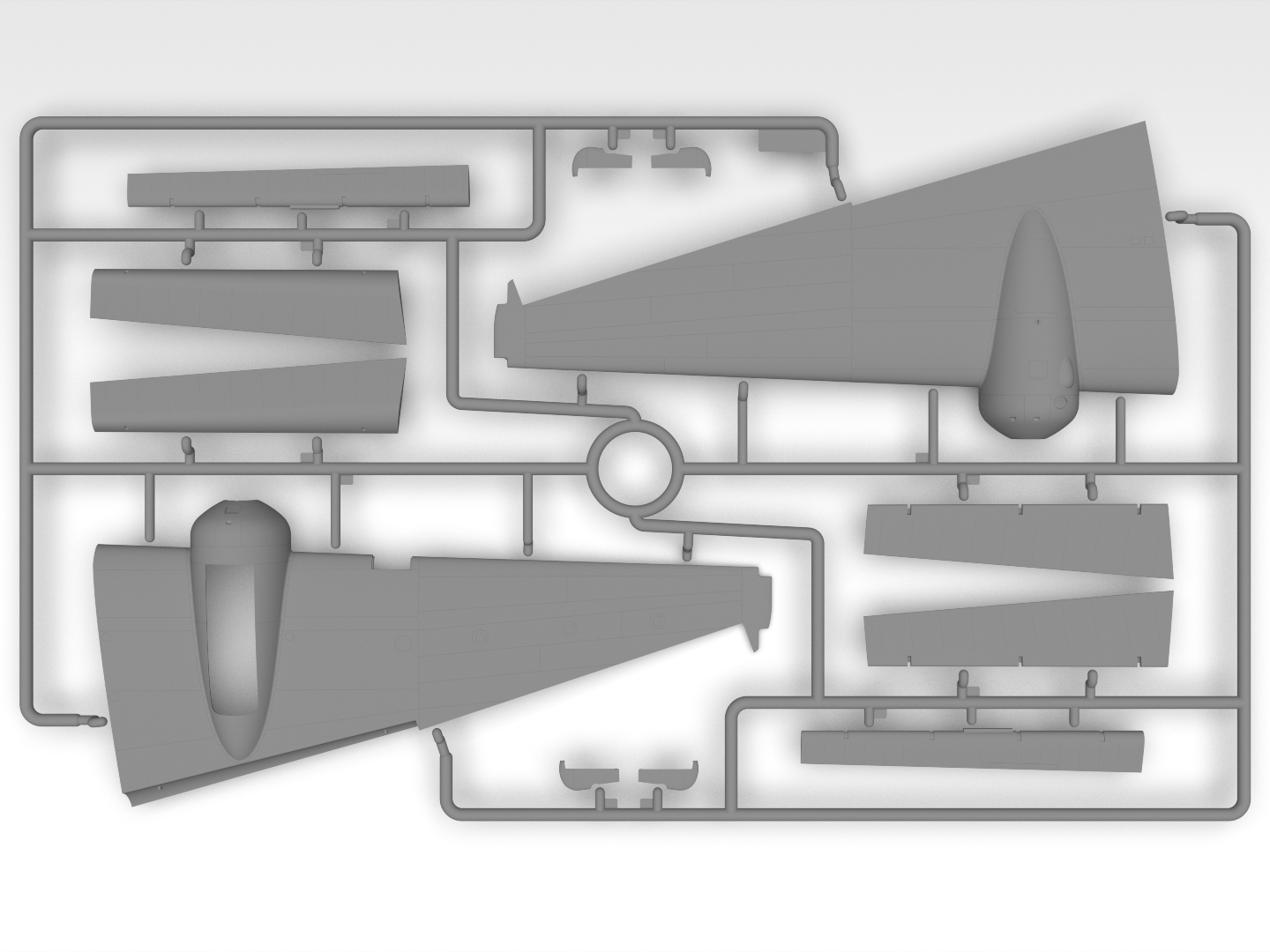
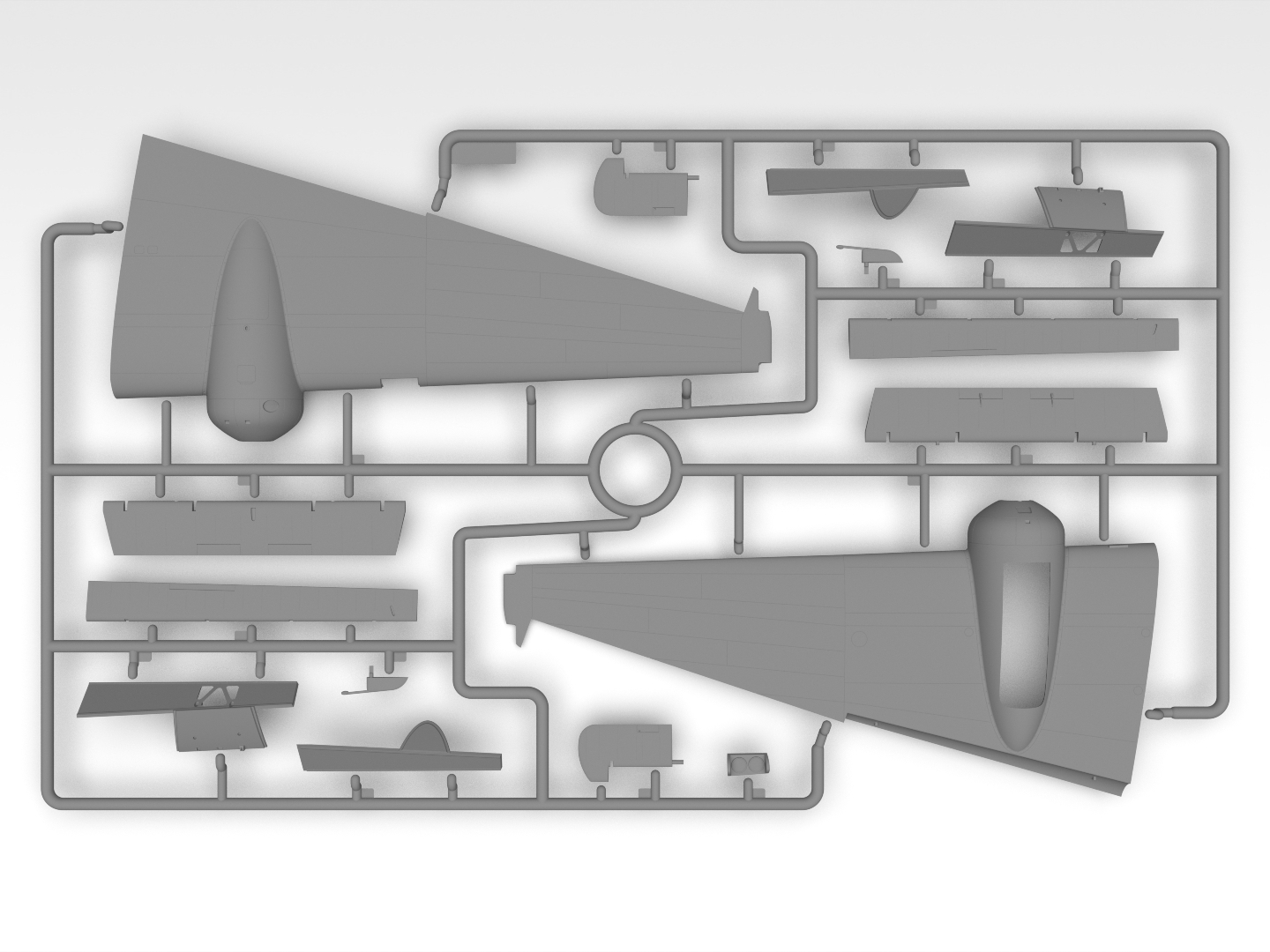
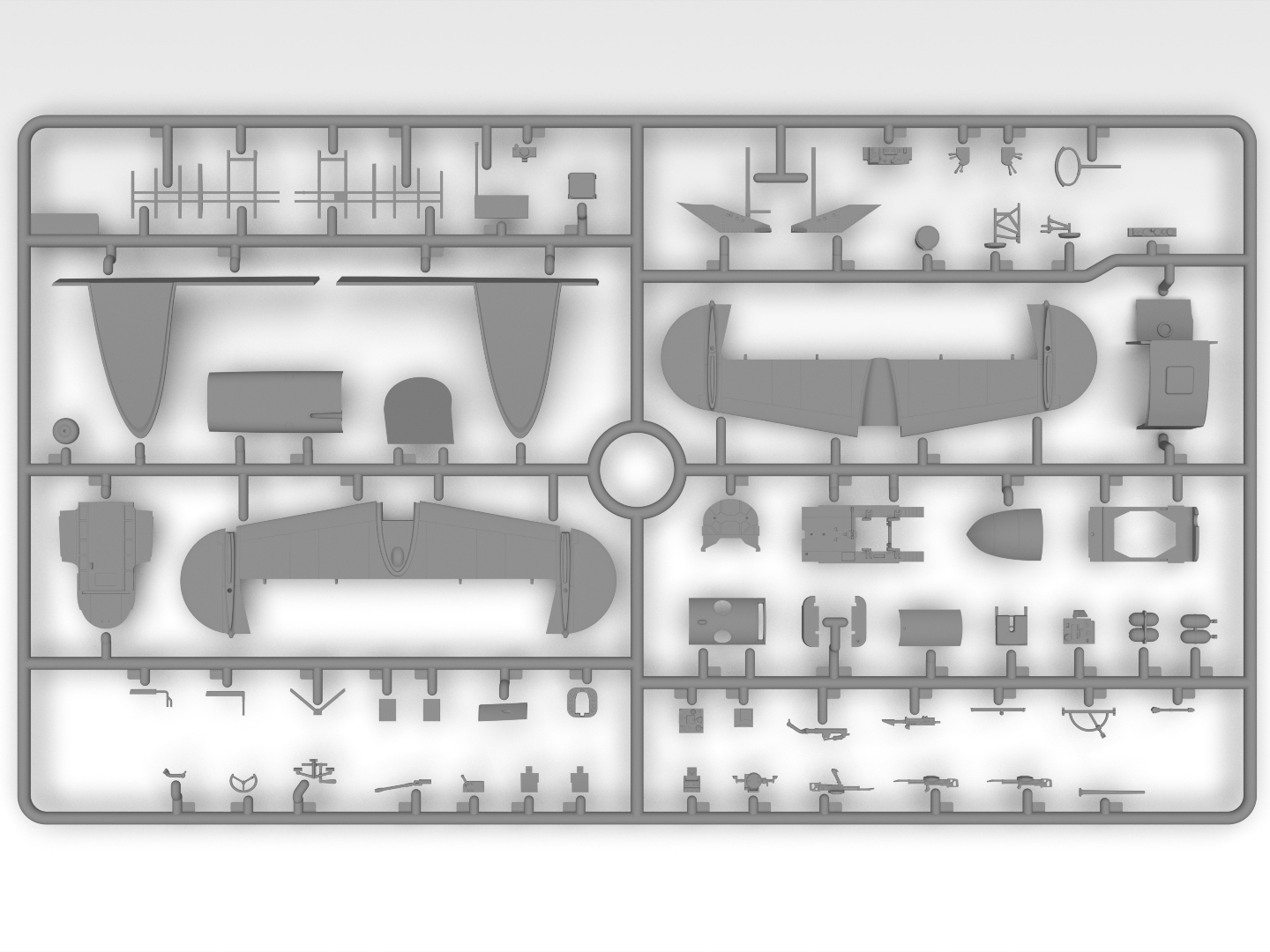
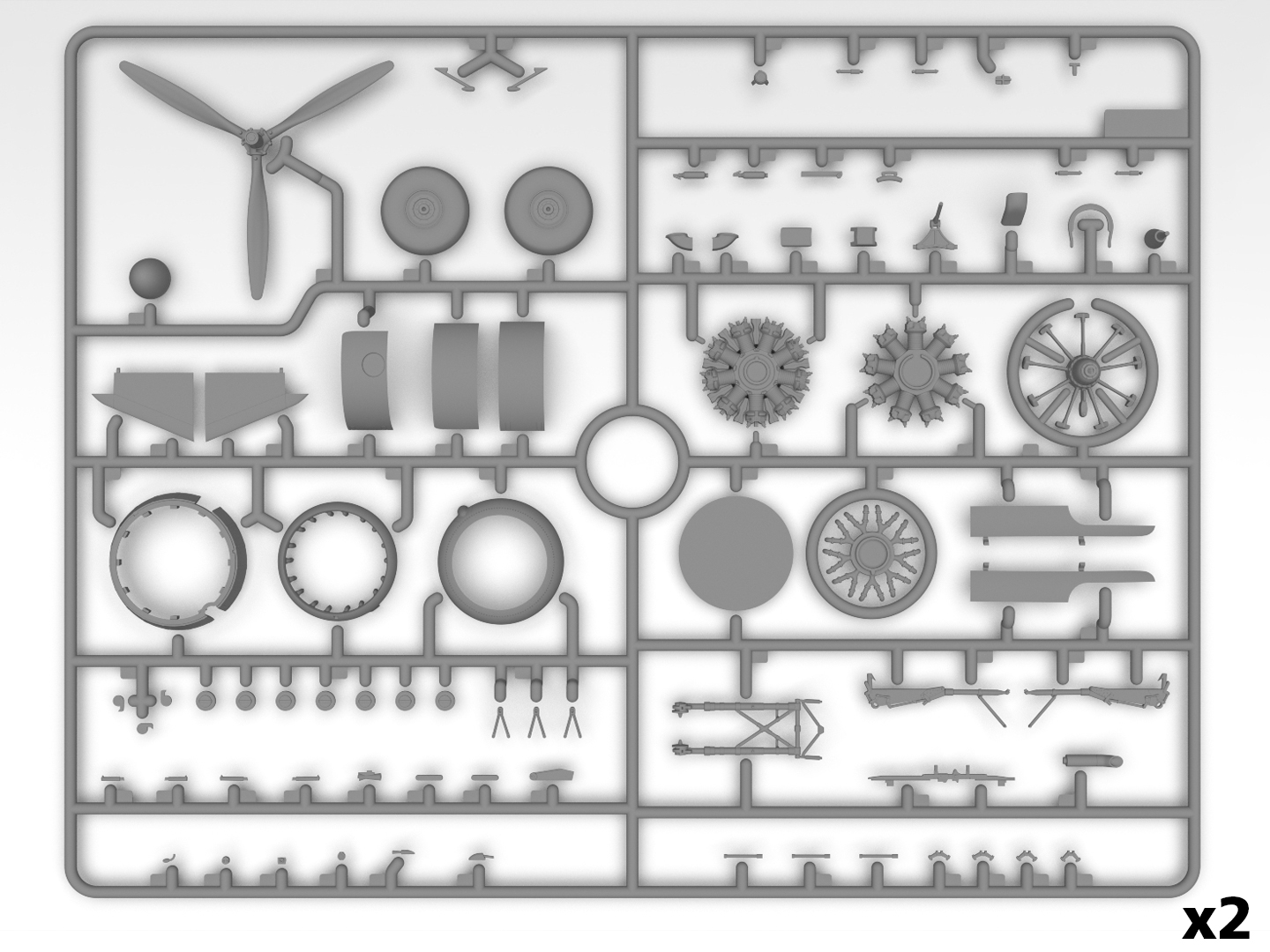
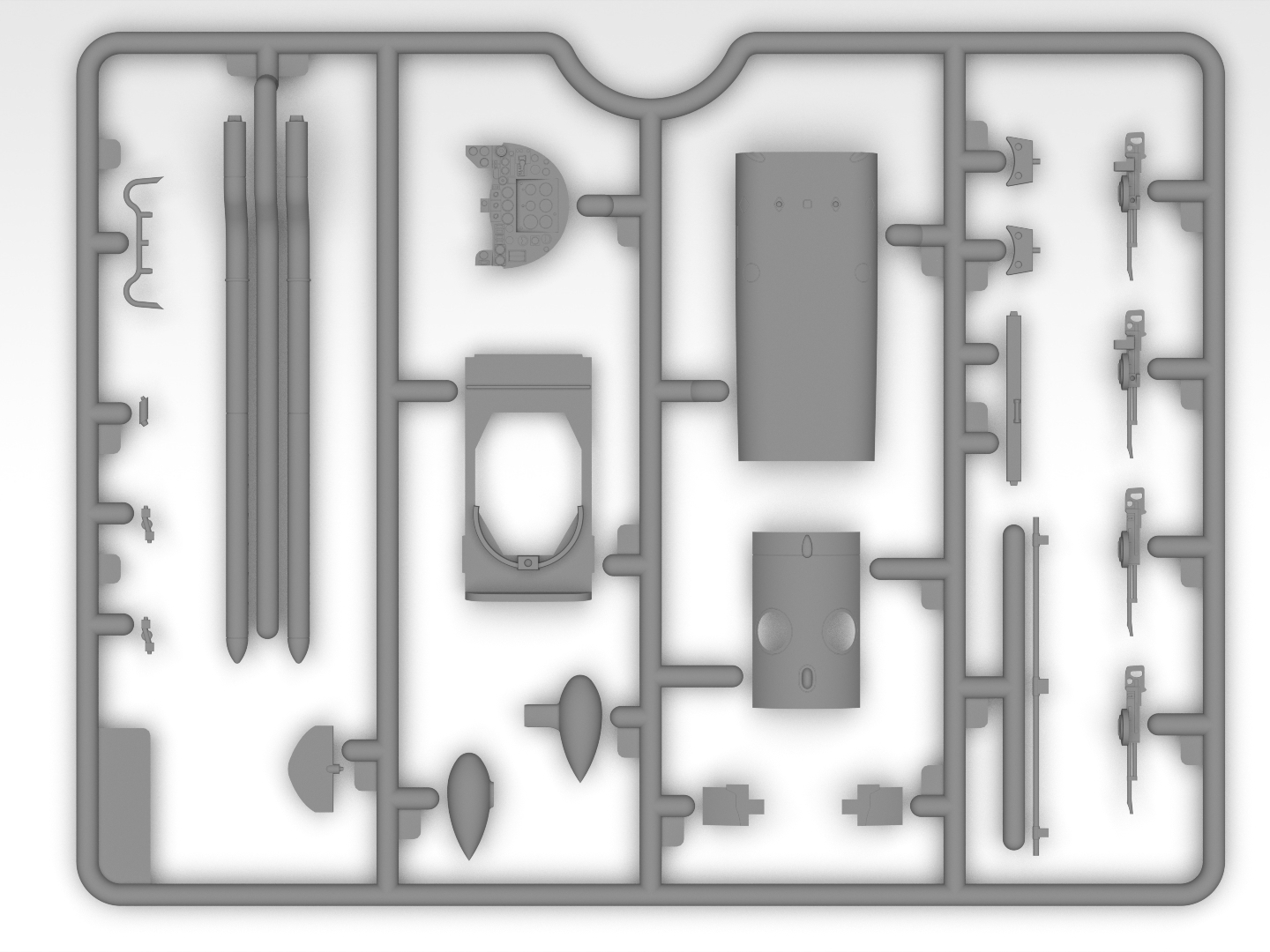
In June 1936, the prototype of a new bomber, developed in response to updated British Air Ministry requirements, took to the skies. The Royal Air Force required a twin-engine strike aircraft with an enclosed cockpit, retractable landing gear, and the capability to carry a relatively large bomb load over long distances. The aircraft was designed by a team led by Dr. Gustav Lachmann.
Following a series of trials, serial production of the new bomber began in the spring of 1938. The aircraft received the designation HP.52 and the name Hampden, in honor of John Hampden, a 17th-century defender of civil liberties. The first production aircraft entered operational service in the autumn of the same year, and by July 1940, Handley Page had produced 500 units.
Starting in February 1940, English Electric also joined production, manufacturing an additional 770 aircraft by March 1942.
The bomber featured a distinctive fuselage design — narrow and vertically deep — which earned it the nickname “Flying Suitcase.” Over time, the HP.52 Hampden underwent several external modifications, including redesigns of the nose section and cockpit glazing.
With the introduction of newer heavy bombers, the Hampden was gradually withdrawn from RAF Bomber Command service. However, it continued to operate with RAF Coastal Command, where it served effectively as a long-range torpedo bomber.